 Business Central
 Sales
 Customer Engagement
 Customer Service
 Field Service
 Power BI
 Power Apps
 Power Pages
 Power Automate
 Microsoft Fabric
 Finance
 Supply Chain
 Project Operations
 More Microsoft expertise
Hire a Dynamics 365 Customer Service consultant when support work needs clearer ownership, more consistent case handling or better routing decisions. Define the customer request types, service commitments and exception paths before choosing automation. The consultant should translate those rules into a usable operating model and measurable test scenarios. Include supervisors and frontline representatives in acceptance. A successful assignment improves the movement of work through the service team, rather than simply creating more queues or reproducing an existing inbox structure.
What to take from this guide
- Separate case lifecycle decisions from routing decisions.
- Test overflow, absence and missing information alongside normal assignments.
- Evaluate the consultant’s understanding of service operations and configuration.
Understand the service operating problem
A growing case backlog can result from too little capacity, unclear ownership, poor classification or repeated transfers between teams. The consultant’s first task should be to distinguish those causes. Review a sample of delayed requests and follow each one from arrival to resolution. Count the handoffs and identify where nobody knew who should act next.
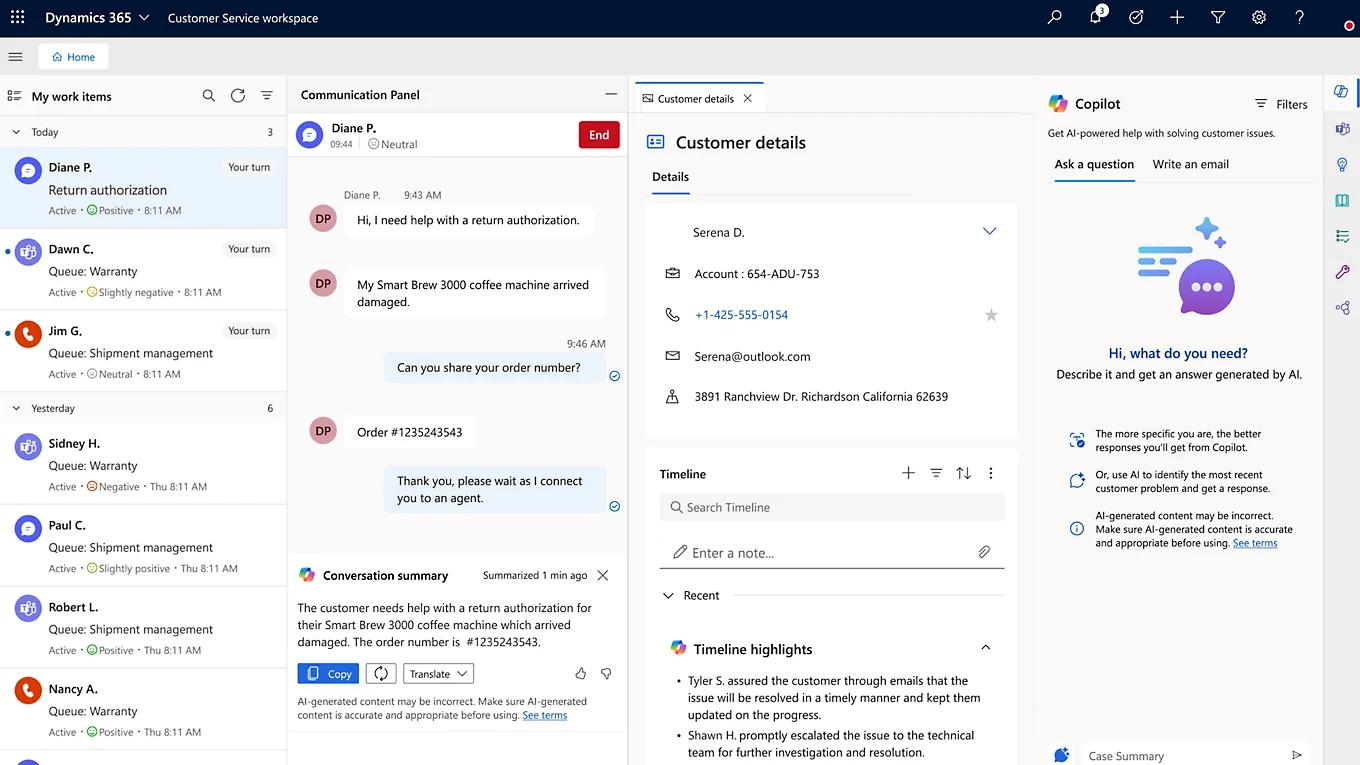
Microsoft describes Customer Service capabilities around cases, workloads, service-level agreements and entitlements. Your hiring brief should identify which parts of that operating model need improvement. A hypothetical equipment supplier might struggle because commercial enquiries and technical breakdowns arrive in the same mailbox, even though they need different expertise. Another business may classify work correctly but lack an escalation owner. These situations call for different configuration and staffing decisions. Ask candidates what evidence they would gather before changing queues or proposing a more complex routing design.
Define a case lifecycle people can follow
Agree what a case represents, when it starts and what evidence allows it to close. A support request, an ongoing problem and an internal task may require different treatment. If everything becomes a case with the same fields, representatives spend time working around the system and managers struggle to interpret the backlog.
Write practical stage definitions using representative examples. Explain how the team records a request waiting for customer information, an issue sent to engineering and a case reopened after an unsuccessful resolution. Name who remains accountable during each wait. Ask the consultant to distinguish information needed at first contact from information that becomes available later. This can reduce unnecessary data entry without losing control. Review the resulting process with frontline users, supervisors and any specialist teams that receive escalations; each group sees a different part of the customer’s experience.
Treat routing as a decision model
Microsoft’s unified routing overview describes matching incoming work to appropriate queues and representatives based on work requirements and representative capabilities. That supports a useful design principle: classification and assignment should follow an explicit business decision model. A queue name is not a complete rule. You also need to explain priority, required skills, availability and what happens when no suitable person is ready.
Build a routing matrix using actual categories of work. Include incomplete requests, conflicting classifications and transfers after the initial assignment. Ask the consultant to describe where a supervisor intervenes and how a representative sees why work arrived. The objective is understandable behaviour, especially when demand changes. Dynamics 365 Customer Service functional consultants should be able to discuss these operational choices before translating them into the configuration available in your environment and licensed feature set.
| Routing question | Decision owner |
|---|---|
| What kind of request? | Service process owner |
| Which expertise is necessary? | Team supervisor |
| Who handles exceptions? | Operations manager |
| What proves completion? | Case process owner |
Design exceptions before adding more rules
Routing designs often work well in a demonstration because every record contains the expected information and every team has available staff. Real support operations include absences, peak periods, language mismatches and requests that fit several categories. Decide how each exception is recognised, who receives it and how long it can remain unresolved.
For a hypothetical manufacturer serving Germany and the United Kingdom, a request might require both a particular language and specialist product knowledge. The business must decide which requirement can wait and what communication goes to the customer. A consultant should facilitate that decision rather than silently relaxing a rule. Keep an exception register with an owner and an agreed response. Test the scenarios during acceptance and review the results with supervisors. This produces a more reliable operating process than adding increasingly specific rules without an agreed fallback path.
Need this expertise in your team?
Start with the workstream, expected outcome and working hours.
Agree service measures that support decisions
A dashboard should help supervisors decide where to intervene. Define the difference between first response, active handling, waiting time and total resolution time. Agree how reopened cases, transferred work and requests waiting on customers affect each measure. Otherwise a team may improve the number on a report while the customer experiences no improvement.
Ask the consultant to create a measure dictionary and trace a small sample of cases through it. Review whether the team needs views by request type, product, language, region or ownership. Do not add categories simply because the platform can store them; each should support a decision. Include data quality checks for unassigned work and inconsistent closure reasons. Where service reporting depends on external systems or analytical models, identify that dependency early and involve the right reporting resource instead of expecting case configuration to resolve every information gap.
Test the representative and supervisor experience
User acceptance should follow a real working shift. A representative receives a request, reviews context, records an action, waits for input, escalates if necessary and closes the case with a useful explanation. A supervisor monitors the queue, handles an exception and understands where capacity is needed. Ask both groups to test with realistic volumes and representative record quality.
Capture friction in ordinary language: too many clicks to understand a customer, uncertainty about ownership, or missing information during a transfer. Classify each issue as training, process, configuration or a genuine technical gap. If custom behaviour is necessary, involve Customer Service developer expertise with a clear acceptance scenario. Keep the functional consultant responsible for the business outcome. A customisation should solve a demonstrated need, not merely make the application resemble the previous system without improving how support work flows.
Compare hiring models for service improvement
Use the Hourly Model for a routing assessment, a queue review or diagnosis of a bounded issue. Give the consultant sample cases and a named supervisor who can explain actual working practices. Require a findings summary that separates configuration changes from staffing or process recommendations. This makes the assessment useful even before a larger delivery decision.
Project Based hiring fits a defined service rollout, routing redesign or case-management improvement with known channels and acceptance tests. List the teams, scenarios and exclusions. A Dedicated Resource suits continuing service optimisation or a delivery partner managing several releases. In that model, provide a prioritised backlog and regular access to operations owners. Do not confuse ongoing capacity with unrestricted support coverage: the contract should define hours, escalation arrangements and who responds to production incidents outside the normal working window.
Coordinate regional support without assumptions
Businesses serving the United States, Canada, Mexico and European countries may share one service application while operating different shifts and languages. Describe those differences in the hiring brief. Define which teams hand work across regions, how customer context follows the handoff and who owns a request while another team is unavailable.
An India-based consultant can support remote workshops and configuration, but overlap and language requirements should be agreed explicitly. For the Netherlands, Denmark, France, Germany and the United Kingdom, confirm whether local-language training is needed or whether internal champions will provide it. Validate regional business calendars and escalation expectations with the customer’s own operations team. Avoid assuming that every region needs a separate queue or a separate process. The consultant should identify a common operating structure with justified differences that remain understandable and supportable as the business expands.
A Customer Service technical consultant can assess the configuration and integration implications of the proposed case process. After release, a Customer Service support consultant may own the investigation of recurring issues. Define the escalation boundary so operational support does not quietly become an unplanned redesign.
Use evidence to select and onboard the consultant
During selection, present an anonymised case that bounced between three teams. Ask the candidate to explain how they would investigate it, what changes they might consider and how they would prove an improvement. Request examples of routing decisions, test scenarios or supervisor guidance from work they personally performed, with confidential details removed.
Before starting, confirm access, environment ownership, channel scope, available representatives for testing and the person who signs off service rules. Where architecture spans several customer applications, consider Customer Service solution architect support. Establish a baseline using the agreed measures and retain a decision log during implementation. At handover, supervisors should know how to recognise routing exceptions and where to request changes. That practical knowledge is as important as the configuration inventory because the service team must continue operating confidently after the consultant’s assignment ends.
- Agreed case definitions
- Documented routing exceptions
- Representative shift testing
- Supervisor handover completed
Before your next hiring conversation.
Do we need unified routing for every support process?+
The choice depends on your channels, work complexity and the features available in your environment. Begin with the assignment problem and exception scenarios rather than selecting a feature first. Ask the consultant to compare suitable options and explain operational ownership. A small, clearly managed process may need less complexity than a large team balancing skills and multiple work streams.
Can a consultant fix a backlog through configuration alone?+
Sometimes configuration removes avoidable delays, but a backlog may also reflect staffing, missing information or unresolved ownership. Ask for a diagnosis using actual cases. The consultant should distinguish application changes from operational decisions. Agree which measures will demonstrate improvement, and involve the service manager in changes that affect priorities, capacity or customer commitments.
What should a routing acceptance test include?+
Test ordinary requests and exceptions: incomplete classification, unavailable skills, representative absence, transfers, overflow and reopened work. Include the supervisor’s ability to understand and intervene. Use agreed expected outcomes for each scenario. A successful demonstration with one fully populated case does not establish that the design is ready for a busy support operation.
Your next step
Share your support channels, case categories and the three most persistent service problems when requesting a Customer Service consultant from Sirius Dynamics. Include team locations, languages, current ownership rules and the level of ongoing support required. Those details make it easier to discuss a relevant profile and engagement model. The best starting point is a service process that people can explain, test and improve, with configuration supporting that shared understanding.
Check the product detail.
Official references for the product and delivery considerations discussed here. The hiring recommendations and illustrative scenarios are Sirius Dynamics editorial guidance.
- Welcome to Dynamics 365 Customer Service ↗Supports the limited product context of cases, workloads, SLAs and entitlements.
- Overview of unified routing ↗Supports the description of work-item matching to queues and representative capabilities.