 Business Central
 Sales
 Customer Engagement
 Customer Service
 Field Service
 Power BI
 Power Apps
 Power Pages
 Power Automate
 Microsoft Fabric
 Finance
 Supply Chain
 Project Operations
 More Microsoft expertise
A Dynamics 365 Customer Engagement developer should be hired for clearly defined application behaviour, integrations or extensions that standard configuration does not adequately address. Evaluate how the person chooses between configuration, automation and code, not simply whether they know C#. The brief should cover Dataverse design, performance, testing, deployment and support ownership. Begin with representative business scenarios and existing customisations. A maintainable solution includes documented decisions and a reliable release path, alongside the working feature that users see.
What to take from this guide
- Assess design judgment before language or tool familiarity.
- Include deployment and failure handling in every customisation scope.
- Keep business acceptance separate from technical completion.
What Customer Engagement development should solve
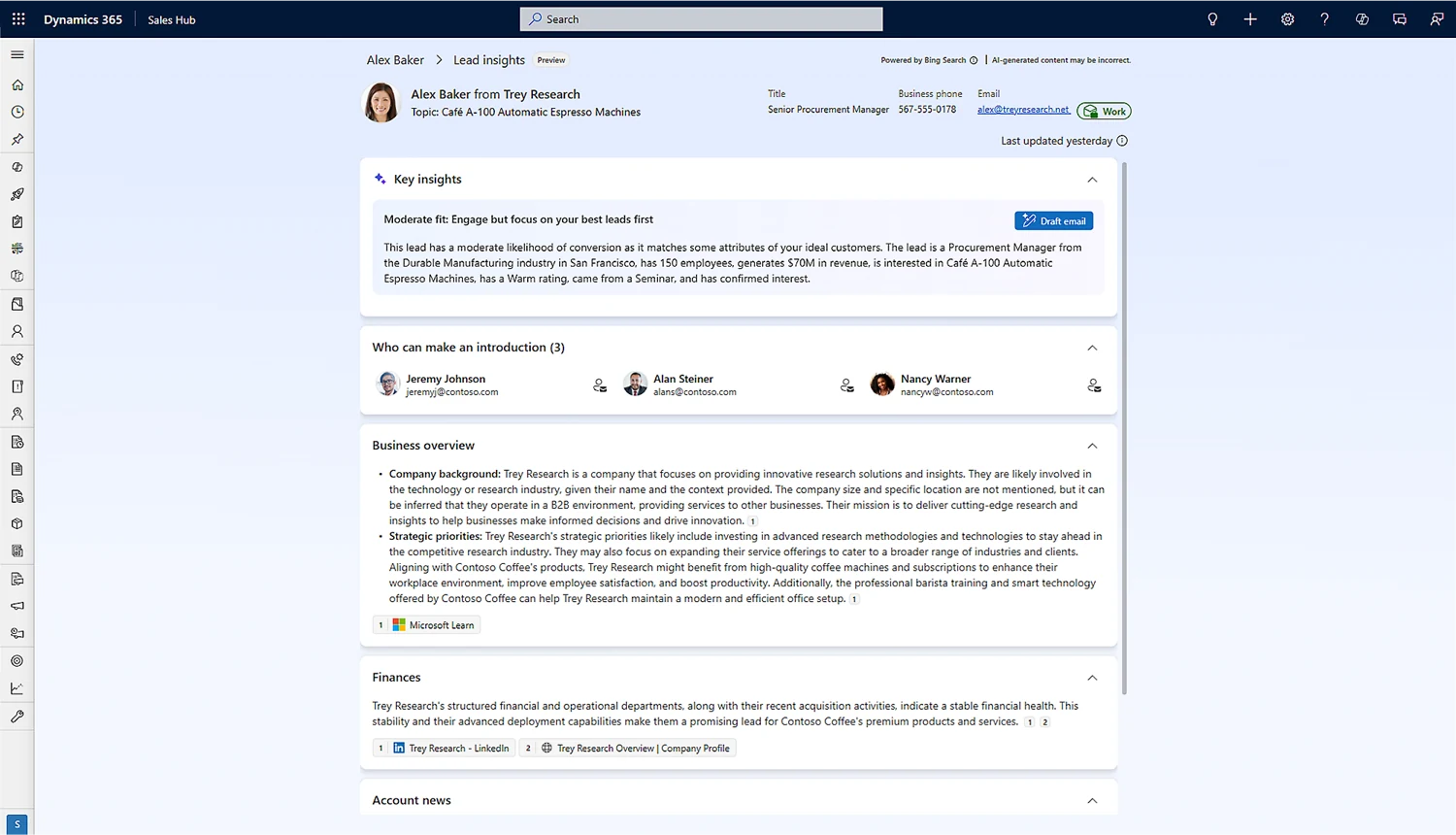
Customer Engagement is often used as an umbrella term for work across customer-facing Dynamics applications and Dataverse. That makes a generic developer brief too broad. One organisation may need a small validation rule; another may need integrations across Sales, Customer Service and a customer portal. Name the actual applications, business events and affected users before selecting a resource.
Use a before-and-after statement for each requirement. For example, in a hypothetical service business, a case cannot be closed until an approved inspection result is available. Explain who supplies that result, what should happen when it is missing and whether other systems create cases. A developer can then evaluate implementation options against a real rule. Without this context, the project risks accumulating scripts that satisfy isolated requests but conflict when records move between applications or when automated processes run outside the user interface.
Configuration, automation and code are different decisions
Microsoft documents plug-ins as code that runs in response to Dataverse events and also points to alternatives such as Power Automate and other platform capabilities. This is a useful basis for an interview: ask why a requirement needs code, what simpler options were considered and who will maintain the chosen approach. Familiarity with plug-ins should improve the decision, not predetermine it.
For each proposed extension, request a short design note recording the trigger, inputs, expected outcome, failure behaviour and alternatives. A business rule used on several channels may require a different approach from a convenience feature on one form. Ask whether the behaviour must happen immediately or can complete later, and what a user should see when it fails. These questions expose whether the candidate understands the business consequences of an implementation choice instead of merely delivering a demonstration that works under ideal conditions.
Look for disciplined Dataverse design
A useful developer asks about the meaning and ownership of data before creating tables and columns. Is a customer classification a shared business concept or a temporary reporting label? Should a relationship allow multiple contacts? What happens when a customer becomes inactive? These are modelling questions with consequences for forms, reports, integration and security.
A hypothetical equipment service application may need to distinguish the company that owns an asset from the site where the asset is installed. Combining those concepts because they match in today’s spreadsheet creates future rework. Ask candidates to sketch the smallest model that supports both current examples and realistic exceptions. Review Customer Engagement Dataverse specialist profiles when the main risk is shared data design. Developers should document naming, relationships and business definitions so future team members can extend the application without guessing what existing structures mean.
Use plug-in examples to test technical judgment
Microsoft distinguishes synchronous plug-ins, which complete before the data operation returns, from asynchronous execution that runs later. The practical hiring question is whether the developer recognises when immediate processing is necessary and how it affects the user experience. A slow external dependency should prompt discussion of failure handling and architecture rather than an automatic call inside a user transaction.
Ask the candidate to explain a hypothetical validation that prevents an invalid order and a separate notification that can arrive later. What evidence would they collect if users report intermittent delays? How would they avoid processing the same business event twice? Do not require one preferred answer for every scenario. Look for explicit assumptions, a clear understanding of consequences and sensible observability. Strong candidates can discuss unhappy paths in plain language so business owners understand the proposed compromise before development starts.
Need this expertise in your team?
Start with the workstream, expected outcome and working hours.
Require releases that another developer can reproduce
A feature that works only in its author’s environment is unfinished. Ask how source code, solution components, configuration values and dependencies will move through development, testing and production. The release instructions should identify required approvals, environment-specific settings and a recovery approach. Ensure the customer controls the repositories and environments needed for ongoing maintenance.
Microsoft’s plug-in registration guidance describes assemblies, steps and solution inclusion. Use this to ask concrete questions about what is actually packaged, rather than accepting a statement that the code is in a solution. Request a witnessed deployment into a clean test target or an appropriately controlled environment. The person reviewing it should be able to follow the instructions without relying on private messages from the developer. Include deployment evidence and unresolved dependencies in acceptance, especially when several partners contribute customisations to the same application.
Build an assessment around a small change request
A proportionate assessment can use a supplied fictitious model and a short requirement. Ask the developer to explain their approach before writing anything. Then discuss test cases, permissions and what they would need to know before estimating. This avoids using a lengthy unpaid production assignment as a screening exercise while still making the person’s reasoning visible.
Useful follow-up questions include: what if an integration creates the record; what if the user lacks permission; what if the process runs twice; and what if a dependent value changes later? Ask for a sample design note or test evidence from prior work with sensitive details removed. Dynamics 365 Customer Engagement developers should be compared against the same requirements. Record the strengths and gaps of each profile rather than selecting solely by speed of response, years on a CV or confidence during a technical conversation.
Choose a hiring model around the development backlog
The Hourly Model is useful for code reviews, fault investigation, limited fixes or an initial technical assessment. Provide a reproducible issue where possible and set a checkpoint before further investigation expands. A Project Based engagement works when acceptance criteria, dependencies and access are stable enough to define a release package. Include documentation, testing and deployment in that package.
A Dedicated Resource supports continuing product development or a partner’s delivery team. It works best with an internal technical owner, a reviewed backlog and a predictable release process. Avoid treating a dedicated developer as the sole architect, tester, administrator and support desk unless the workload truly allows it. Compare the models by who owns priorities and risk. A bounded project transfers a defined delivery responsibility; dedicated capacity supplies regular expertise but still needs direction, timely answers and shared quality standards.
| Model | Suitable work | Essential control |
|---|---|---|
| Hourly Model | Investigation and code review | A bounded question |
| Project Based | Defined feature release | Agreed acceptance scenarios |
| Dedicated Resource | Ongoing application development | Reviewed backlog and release ownership |
Protect maintainability during cross-border delivery
Remote development from India can support teams in North America and Europe when the work is organised for clear handoffs. Set overlap hours for design reviews and blocked decisions, then use written acceptance examples for work completed outside those hours. Agree where issues, code reviews and release decisions are recorded. Important design choices should not live only in meeting recordings.
For a United States or Canada-based product owner, identify the reviewer available before the development day ends. For teams in Germany, France, Denmark, the Netherlands, the United Kingdom or Mexico, separate the required workshop language from code and documentation conventions. Establish approved access paths before the resource starts. Use sanitised test scenarios wherever possible. The aim is not maximum meeting time; it is enough shared understanding that the developer can work independently without introducing assumptions into business-critical behaviour.
Define acceptance and the support boundary
Technical completion means the agreed behaviour works under the agreed conditions. Business acceptance adds confirmation that users can perform the task and that exceptions are handled sensibly. Write both down. Include a small regression set covering affected customer processes, not just the new button or field. A change to a common customer table can affect several applications.
Before release, check that someone can find the source, deploy the package, interpret a failure and identify the responsible owner. Record known limitations and follow-up work without hiding them inside a completion message. Where cross-application architecture is unresolved, involve a Customer Engagement solution architect before adding more code. A clear support boundary should distinguish defects against agreed requirements, new business requests and platform changes. That distinction protects continuity and makes future estimates more meaningful for both the customer and the development team.
- Documented extension rationale
- Customer-controlled source repository
- Repeatable deployment instructions
- Named production approver
Before your next hiring conversation.
Is a C# developer automatically suitable for Customer Engagement work?+
No. General programming experience is helpful, but the resource also needs relevant Dataverse and Dynamics application experience. Ask how they handle platform events, security context, solution deployment and existing customisations. A practical scenario should reveal whether they can apply their coding skills within the platform’s behaviour and maintain a solution that another team can support.
Should every CRM change use a plug-in?+
No. The implementation should follow the requirement. Configuration, platform features or automation may be easier to maintain for some scenarios. Plug-ins can be appropriate for particular event-driven business rules. Ask for the alternatives, timing requirements and failure implications to be documented so the choice remains understandable when requirements change or a different developer takes ownership.
What should be included in a development handover?+
Request source access, solution packages, deployment instructions, configuration details, test evidence and a short design explanation. Include dependencies, known limitations and support ownership. The handover should allow another authorised developer to reproduce the release and investigate common failures. A demonstration video is useful, but it should complement written instructions and controlled source files.
Your next step
Prepare a development enquiry with the actual Dynamics applications, a short business scenario, existing customisations and the expected release outcome. Explain who owns architecture, testing and production approval. Sirius Dynamics can discuss Customer Engagement developer profiles and whether hourly assistance, a defined project or dedicated capacity fits the work. The goal is a resource who can explain design choices clearly and leave a maintainable solution behind, not just complete an isolated coding task.
Check the product detail.
Official references for the product and delivery considerations discussed here. The hiring recommendations and illustrative scenarios are Sirius Dynamics editorial guidance.
- Use plug-ins to extend business processes ↗Supports the narrow comparison of plug-in timing and alternative platform approaches.
- Register a plug-in ↗Supports the distinction between plug-in assemblies, steps and inclusion in solutions.